


The 7-Day Botanical Precision Care Routine Your Skin Tags Aren't a Sign of Aging. They're Your Body's Alarm Bell.
The 7-Day Botanical Precision Care Routine Your Skin Tags Aren't a Sign of Aging. They're Your Body's Alarm Bell.
Couldn't load pickup availability
-
Ordered
- - -
Order Ready
- - -
Delivered

The 7-Day Botanical Precision Care Routine Your Skin Tags Aren't a Sign of Aging. They're Your Body's Alarm Bell.
The first precision 1.5mm micro-rollerball to deliver a 3-step botanical desiccation sequence directly to the root — safely, invisibly, and entirely on your own terms. Clear skin in 7 days. No clinic. No burning. No bandages.


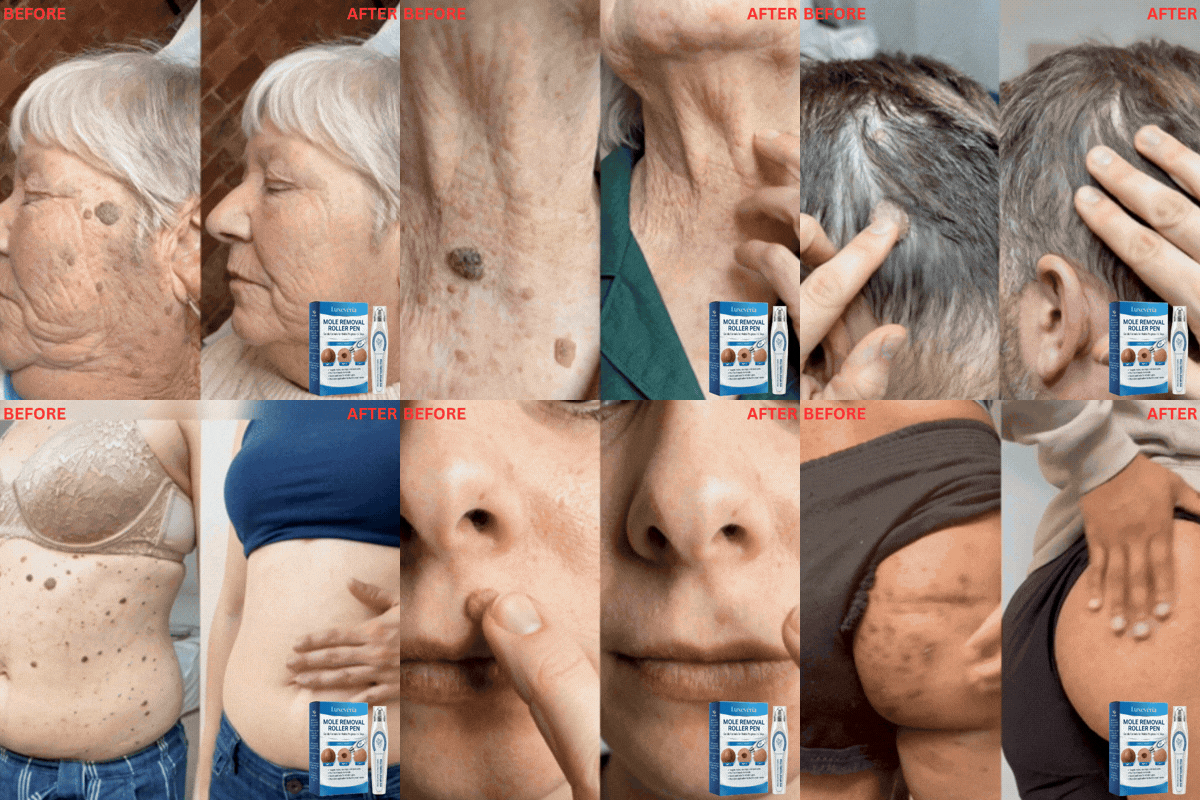
Protects delicate skin
Clinically Recommended
Lightweight formula
Soothes & Protects
Brightens instantly
Protects delicate skin
Clinically Recommended
Lightweight formula
Soothes & Protects
Brightens instantly
Protects delicate skin
Clinically Recommended
Lightweight formula
Soothes & Protects
Brightens instantly
Protects delicate skin
Clinically Recommended
Lightweight formula
Soothes & Protects
Brightens instantly
Protects delicate skin
Clinically Recommended
Lightweight formula
Soothes & Protects
Brightens instantly
Protects delicate skin
Clinically Recommended
Lightweight formula
Soothes & Protects
Brightens instantly
Protects delicate skin
Clinically Recommended
Lightweight formula
Soothes & Protects
Brightens instantly
Protects delicate skin
Clinically Recommended
Lightweight formula
Soothes & Protects
Brightens instantly

The Truth They Never Tell You
Skin Tags Are Not Cosmetic. They're a Metabolic Warning Signal.
Clinical research has revealed a startling link between skin tag formation and internal insulin resistance — a connection that standard dermatology never mentions because there's no money in it for them.
Modern processed diets trigger chronic blood sugar spikes and systemic hyperinsulinemia. This forces overproduction of Insulin-like Growth Factor 1 (IGF-1), which binds to skin tissue receptors — forcing skin cells and connective tissue to multiply at an abnormal, accelerating rate.
These proliferating cells, combined with constant friction from tight synthetic clothing, create the perfect biological environment for skin tags to form in your neck, underarms, bra lines, groin, and beyond.
This means every tag you dismiss as "just aging" is actually your body urgently signaling an internal metabolic shift — one that standard blood tests may not catch for years.
Removing them isn't vanity. It's answering the alarm.
Why Everything Else Failed You
-

drugstore freeze kits & acid droppers
Aerosol freeze pens can't deliver cold with pinpoint precision — they cause thermal shock to surrounding healthy skin. High-concentration acid droppers run freely, burning a crater ten times larger than the original tag. Sufferers have needed skin grafts. And when the root survives, the tag grows back larger.
-

physical ligation bands
These kits strangle tissue over days, leaving a blackened, dying, shriveled mass visible to anyone who looks. The pinching is relentless. And they are entirely impossible to use on delicate skin — eyelids, the groin, or anywhere intimacy matters.
-

clinical dermatology
Dermatologists classify tag removal as "purely cosmetic" — meaning insurance won't touch it. A 15-minute procedure costs $150 to $500 out of pocket. And after charging you, they'll tell you it's harmless and dismiss your suffering. The average cosmetic dermatologist earns over $500,000 annually on appointments exactly like yours.


The 500-Year Botanical Secret
The Ancient Survival Formula Behind us
In 1535, on the frozen St. Lawrence River in Quebec, French explorer Jacques Cartier's crew lay dying of scurvy and tissue decay. An Iroquois healer shared the secret of Ameda — a native evergreen. Within days of drinking the decoction, the entire crew recovered. Cartier carried specimens to King Francis I, whose botanists named it "Arborvitae" — the Tree of Life.
That same plant — Thuja occidentalis — was studied by European herbalists over two centuries and found to possess remarkable antiviral, antimicrobial, and tissue-drying properties when applied topically.
By 1885 and 1892, it was officially codified in the British Extra Pharmacopoeia — specifically indicated for removing stubborn warts and clearing abnormal tissue overgrowths. Early 20th-century Eclectic physicians relied on it to safely desiccate abnormal dermal growths without scarring the healthy tissue beneath.
Alongside Thuja, medieval European folk healers discovered Chelidonium majus — called "Wartweed" — whose orange latex sap contains natural escharotic alkaloids that selectively dry out abnormal skin cells without the deep chemical burns caused by synthetic acids.